
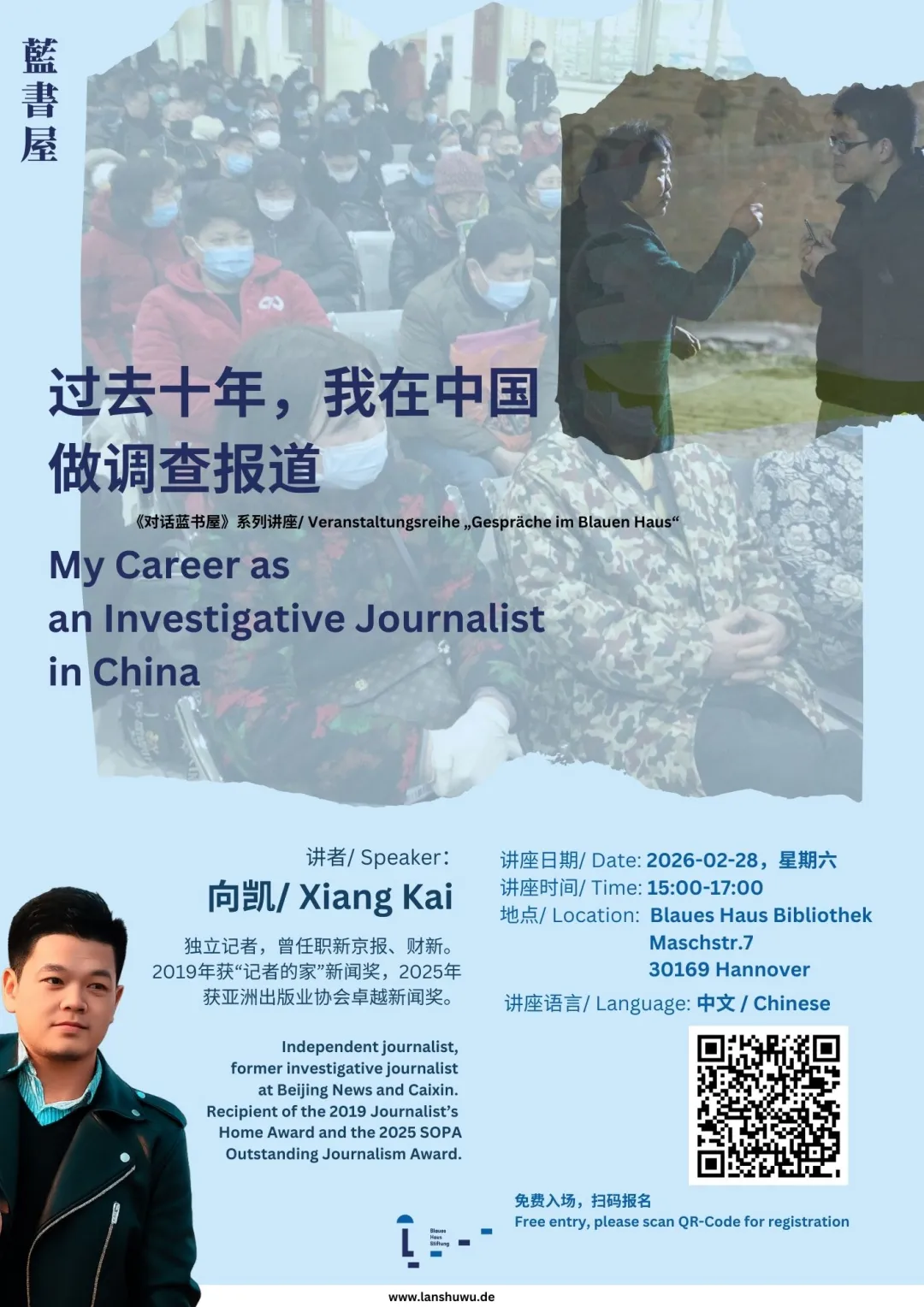
On Saturday, February 28th, Blaus Haus invites Xiang Kai, an investigative journalist who previously worked for media outlets such as “The Beijing News” and “Caixin“, to share his professional experience and life story.
As a political and legal journalist, Xiang Kai has personally witnessed many major social events, such as the 2019 Jiangsu Xiangshui chemical plant explosion, the 2022 China Eastern Airlines crash, and the 2024 Guangdong Meida Expressway collapse. As a native of Wuhan, he also personally experienced the outbreak of the COVID-19 epidemic in Wuhan at the end of 2019 and participated in frontline reporting.

[Photo caption: At 10:00 AM on January 23, 2020, the entrance to Wuhan Railway Station was closed. Photo by Xiang Kai]
Below is a brief description of his career by himself:
From the moment I received a story assignment, I had to be able to leave within half an hour. Even before setting off, I had to start contacting people through various means such as the internet, phone calls, and friends. For a long time, this was my daily work rhythm.
I am an investigative journalist, mainly reporting on China’s political, legal, and major social emergencies.
Floods, mudslides, typhoons, chemical plant explosions, fires, plane crashes—except for earthquakes, I’ve covered almost every other natural disaster and major accident site. I’ve also reported on heinous incidents such as official corruption and indiscriminate killings.
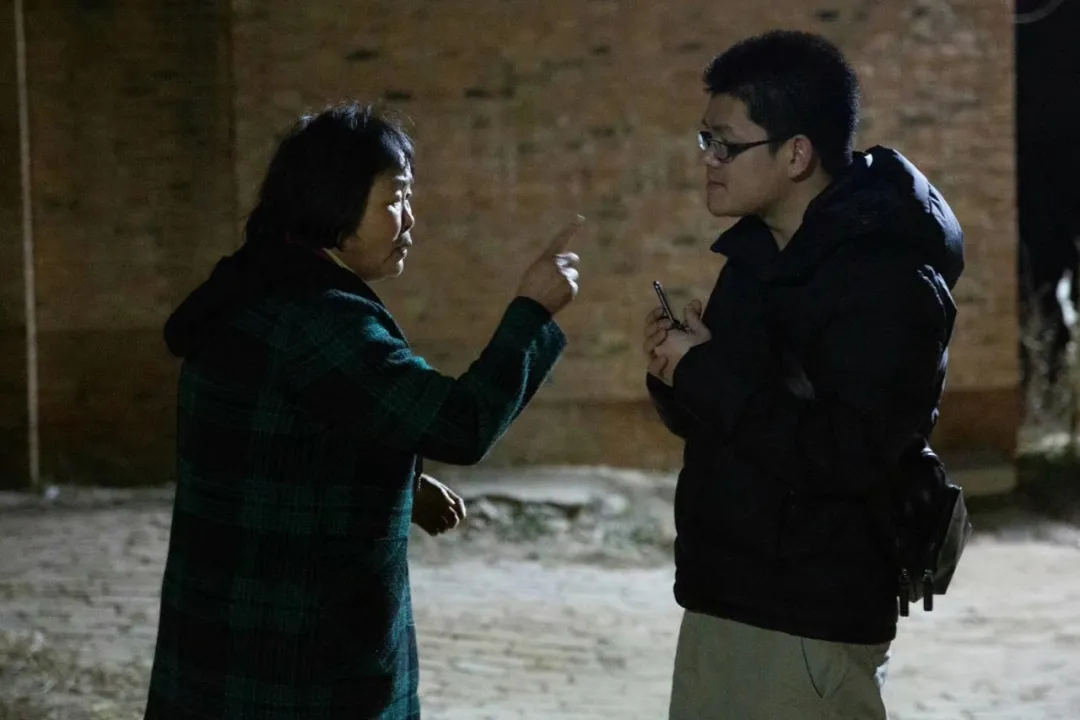
(Photo: Xiang Kai interviewing about rural heating issues in Hebei Province at the end of 2019. Photo by Li Kaixiang)
The vast majority of social events in China occur at the grassroots level. During rapid urbanization, a large number of left-behind children have led to various social problems; inaction or misconduct by local governments, as well as issues related to education, healthcare, and other livelihoods, result in the most concentrated and intense conflicts at the grassroots level. Doing investigative reporting in China means understanding the operating logic of grassroots society and being able to navigate complex environments.
Investigative reporting aims to expose problems and supervise public power, inevitably jeopardizing others‘ finance, careers, or reputations. Such reporting is adversarial, requiring reporters to grasp core facts, verify them repeatedly, and ensure authenticity. Any oversight can be seized upon, putting the reporter in a dangerous situation.
The COVID-19 pandemic that broke out in 2019 was a turning point in my career. I began reporting on the „pneumonia of unknown cause“ and spent 76 days in Wuhan during the city’s lockdown. Afterwards, I traveled to Beijing and Guangzhou to continue reporting on the epidemic. For six years, COVID-19 has been my most important and longest-running topic.

January 2020, a waiting room at a Wuhan hospital. Photo by Xiang Kai
Like many important historical events, COVID-19 has left countless questions unanswered. But I believe that many times, the questions in China are not unanswerable; they lie dormant in archives or documents. The duty of an investigative journalist is to bravely seek breakthroughs and uncover the truth.
Finally, I am currently conducting research on the Collective Memory of COVID-19, exploring how the collective memory of COVID-19 is being shaped and how different societies are reflecting on the pandemic. If you are still interested in this topic or have any questions, please contact me at pipixiang@proton.me.
Speaker

Xiang Kai is an independent journalist who has worked as an investigative reporter for media organizations such as “The Beijing News” and “Caixin”, focusing on major political, legal, and social emergencies in China. He received the „Journalist’s Home“ Journalism Award in 2019 and the Society of Publishers in Asia (SOPA) Award for Excellence in Journalism in 2025. His works have appeared in domestic and international media and academic research platforms. In 2024, he was selected for the Chinese University of Hong Kong’s Media Residency Program. He currently resides in Berlin. His works include „From Death Row Inmate to Reinvolvement in Organized Crime: An Investigation into Sun Xiaoguo, the ‚Kunming Bully‘,“ „The Tragedy of the Meida Expressway,“ „A COVID-19 Patient Commits Suicide at the Guangzhou Nansha Gymnasium Makeshift Hospital,“ and „Unbearable Memories Must Be Remembered: Tenders for the Demolition of Makeshift Hospitals in Various Regions,“ among others.
Event Information
Date: Saturday, February 28, 2026
Time: 15:00 – 17:00
Location: Blaues Haus Bibliothek, Maschstr. 7, 30169 Hannover
Language: Chinese
Registration: Free admission. Please scan the QR code below to register at Eventbrite. If you encounter scanning issues, please copy the following link and open it in your mobile browser: https://www.eventbrite.de/e/2-tickets-1982715048082

Important Notes:
- Adults and children aged 12 and above are welcome to register.
- If you are unable to attend after registering, please cancel your registration promptly to allow others to participate.
- Registered participants are requested to arrive no later than 5 minutes before the lecture begins.
- Recording is prohibited during the event. Thank you for your understanding.
- Photos will be taken during the event and will be used internally by the Blue Book House Foundation. Please inform us in advance if you have any objections.